










Taking on a multi-phase renovation can feel exciting at first—new spaces, improved functionality, and a refreshed home. But that excitement can quickly fade if the financial side isn’t handled carefully. Unlike single-project upgrades, phased renovations stretch across time, which means your budget needs to be flexible, resilient, and grounded in reality.
A well-planned budget doesn’t just keep your project on track—it helps you make smarter decisions at every stage. It gives you the confidence to move forward without second-guessing every expense and allows you to adapt when unexpected challenges arise. Whether you’re updating one room at a time or transforming your entire property over several years, the key is to think holistically from the start.
Define Your Renovation Goals and Priorities Early

Before any numbers come into play, you need clarity. Not just a vague idea of “updating the house,” but a defined vision of what success looks like when everything is complete. This is where many homeowners unintentionally create budget problems—they jump into projects without understanding how each phase connects to the bigger picture.
Start by asking yourself a few grounded questions:
- What are the primary pain points in your home right now?
- Which upgrades will improve your daily life the most?
- Are you renovating for resale, comfort, or long-term investment?
For example, someone planning kitchen remodeling might initially focus on aesthetics—new cabinets, upgraded countertops—but overlook functional upgrades like layout improvements or better lighting. At the same time, something like window replacement might not feel urgent, yet it could significantly improve energy efficiency and reduce long-term costs.
This is where prioritization becomes essential. When you map out your goals, divide them into tiers:
- Immediate needs (safety, structural integrity)
- High-impact improvements (functionality and value)
- Cosmetic upgrades (visual appeal)
By doing this early, you avoid the common trap of spending heavily on surface-level improvements before addressing deeper issues. It also ensures that each phase builds toward a cohesive end result instead of feeling like a collection of disconnected projects. Some homeowners even create a visual roadmap—either a simple sketch or a digital plan—to see how each upgrade connects. This added clarity can make decision-making far easier when budget trade-offs inevitably arise.
Build a Realistic Master Budget Before Starting
Once your goals are clear, the next step is creating a master budget—not just for the first phase, but for the entire renovation journey. Even if you don’t have exact numbers yet, establishing a rough financial framework helps prevent surprises later.
Think of this as a living document. It should include:
- Estimated costs for each phase
- Labor and material breakdowns
- Permit and inspection fees
- A contingency buffer
One area that often catches homeowners off guard is the cost of groundwork and preparation. For instance, working with a concrete company to handle foundational elements may reveal additional needs once the project begins. Similarly, tasks like concrete disposal can add unexpected costs if they aren’t factored in early.
A practical way to approach this is to build your budget in layers:
- Start with high-level estimates for each phase
- Refine those estimates with contractor input
- Add a contingency margin (typically 10–20%)
It’s also worth noting that costs fluctuate over time. Materials, labor availability, and even seasonal demand can shift pricing. A realistic budget accounts for these variables instead of assuming everything will go exactly as planned. Revisiting your budget periodically—especially between phases—can help you stay aligned with current market conditions and avoid underestimating future costs.
Create a Phased Timeline That Matches Your Budget
Timing and budgeting are deeply connected. A well-structured timeline doesn’t just organize your renovation—it protects your finances.
When planning your phases, think beyond convenience. The order of your projects should reflect both logical construction flow and financial efficiency. Structural work should generally come before cosmetic upgrades, and exterior improvements often make more sense after major interior changes are complete.
For example, scheduling residential concrete pumping early in the process ensures that foundational work is completed before other trades begin. On the other hand, working with a driveway gate company might be more appropriate later, once the main construction activity has settled and access points are finalized.
A helpful way to approach phasing is to map out dependencies:
- Which tasks must be completed before others can begin?
- Where can delays create a ripple effect?
- Which phases can be postponed without affecting the rest?
Spacing out phases can also provide breathing room for your budget. Instead of stretching your finances thin by tackling multiple projects at once, you allow time to recover and reassess between stages. In practice, this might mean completing foundational work one year and saving for aesthetic upgrades the next, rather than trying to do everything simultaneously.
Prioritize Structural and Foundational Work First
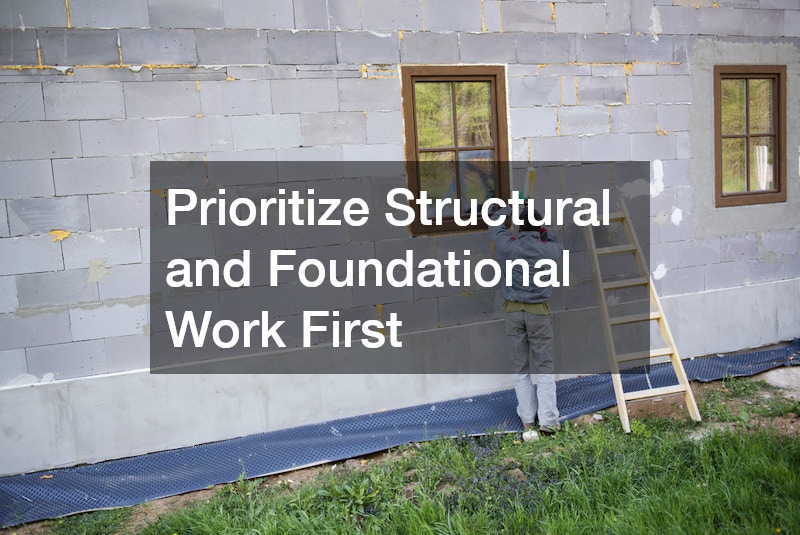
It’s tempting to start with visible upgrades—the ones that make your home look better right away. But skipping foundational work can lead to costly setbacks later.
Structural improvements form the backbone of your renovation. They ensure that everything built on top of them is stable, safe, and long-lasting. Ignoring these elements often results in rework, which is one of the fastest ways to exceed your budget.
Consider a scenario where someone installs new finishes before addressing underlying issues. They might invest in beautiful hardwood flooring, only to discover moisture problems or uneven subfloors later. Fixing those issues could mean tearing out and replacing materials that were just installed.
Similarly, exterior considerations like fence installations might not seem urgent, but they can play a role in property security and boundary definition—especially if other construction work is happening simultaneously.
The key here is sequencing. Address anything that affects:
- Structural integrity
- Safety
- Long-term durability
before moving on to purely aesthetic upgrades. This approach may not deliver instant visual gratification, but it protects your investment and prevents avoidable expenses down the line. It also creates a stable foundation that ensures future upgrades perform as expected.
Get Multiple Quotes and Compare Contractor Value
Hiring the right professionals can make or break your renovation budget. While it’s natural to focus on price, the lowest quote isn’t always the best value.
A more effective approach is to evaluate contractors holistically. This means looking at:
- Experience and specialization
- Past project quality
- Communication style
- Warranty and support
For example, working with a local flooring contractor can provide insights that go beyond pricing. They may identify potential issues with your subfloor or recommend materials better suited to your environment. Likewise, when considering finishes like epoxy floor coating, comparing not just cost but durability and maintenance requirements can lead to smarter decisions.
It’s also important to understand what each quote includes. Two contractors might offer similar prices, but one could include additional services such as preparation, cleanup, or follow-up inspections.
Instead of rushing the selection process, take time to:
- Ask detailed questions
- Request itemized estimates
- Check references
This extra effort upfront often leads to fewer surprises and a smoother renovation experience overall. It also builds stronger working relationships, which can be invaluable across multiple phases of a long-term project.
Allocate a Contingency Fund for Each Phase
No matter how carefully you plan, unexpected costs are almost inevitable. The question isn’t whether they’ll happen—it’s how prepared you’ll be when they do.
A contingency fund acts as your financial safety net. Rather than scrambling to cover surprises, you have a dedicated buffer that keeps your project moving forward.
Common unexpected expenses include:
- Hidden structural issues
- Material price increases
- Delays requiring additional labor
Instead of treating contingency as a single lump sum, consider allocating a percentage to each phase. This approach gives you more control and prevents one stage from consuming your entire buffer.
There’s also a psychological benefit. Knowing that you’ve planned for the unexpected reduces stress and allows you to make decisions more confidently. You’re not constantly worried about every minor deviation from the plan. In many cases, having that cushion is what separates a manageable setback from a major disruption.
Choose Materials That Balance Cost and Longevity

Material selection is one of the most impactful decisions you’ll make during a renovation. It affects not only your upfront costs but also long-term maintenance and durability.
It’s easy to be drawn to lower-priced options, especially when you’re managing multiple phases. But cheaper materials often come with trade-offs—shorter lifespans, higher maintenance, or reduced performance.
A more strategic approach is to evaluate materials based on total value rather than initial cost. For instance:
- Will this material need replacement in a few years?
- Does it require frequent upkeep?
- How does it perform under daily use?
In many cases, investing slightly more upfront can save money over time. Durable materials reduce the need for repairs and replacements, which helps stabilize your budget across phases.
Consistency also matters. Choosing materials that work well together ensures a cohesive look and avoids the need for adjustments later. When each phase complements the next, you avoid the patchwork effect that can happen when decisions are made in isolation.
Track Spending and Adjust Plans in Real Time
A budget isn’t something you set once and forget—it’s a tool that should evolve alongside your project.
Tracking your expenses in real time gives you visibility into how your budget is performing. It allows you to catch discrepancies early and make adjustments before they become major issues.
You don’t need complex software to do this. A simple spreadsheet can be enough if it’s updated regularly. The key is consistency.
As you move through each phase:
- Compare estimated costs to actual spending
- Identify areas where you’re over or under budget
- Adjust upcoming phases accordingly
For example, if one phase comes in under budget, you might choose to reinvest those savings into higher-quality materials later. On the other hand, if costs exceed expectations, you can scale back future plans without derailing the entire project.
This level of awareness turns your budget into a dynamic guide rather than a rigid constraint. Over time, it also helps you become more accurate in your estimates, making each subsequent phase easier to plan.
Plan for Permits, Inspections, and Hidden Fees
Permits and inspections are often treated as afterthoughts, but they can have a significant impact on both your timeline and your budget.
Depending on the scope of your renovation, you may need approvals for structural changes, electrical work, plumbing updates, or exterior modifications. These requirements vary by location, so it’s important to research them early.
Failing to secure the proper permits can lead to:
- Fines
- Project delays
- Required rework
In addition to permit fees, there are often indirect costs to consider. Inspections may require scheduling adjustments, and delays can increase labor expenses.
Working with experienced professionals can help navigate this process, but it’s still your responsibility to ensure everything is accounted for in your budget. A little extra planning here can prevent major disruptions later in the project.
Know When to DIY and When to Hire Professionals

One of the most effective ways to manage renovation costs is knowing where you can save money—and where you shouldn’t.
DIY work can be a great option for simpler tasks like painting or minor installations. It reduces labor costs and gives you more control over the process. However, taking on complex work without the necessary expertise can lead to costly mistakes.
A good rule of thumb is to consider the risk level:
- Low-risk tasks: cosmetic updates, basic installations
- High-risk tasks: structural work, electrical, plumbing
Time is another factor. Even if you’re capable of doing something yourself, it may take significantly longer than hiring a professional. Delays can affect other phases and increase overall costs.
Striking the right balance allows you to save money without compromising quality or efficiency. In many cases, a hybrid approach—handling minor tasks yourself while outsourcing specialized work—provides the best results.
Bringing It All Together for a Smoother Renovation Journey
Budgeting for a multi-phase renovation isn’t about restricting your vision—it’s about making that vision achievable. When you approach the process with clarity, structure, and flexibility, each phase becomes more manageable and less stressful.
By defining your goals, planning your finances carefully, and adapting as you go, you create a renovation experience that feels controlled rather than overwhelming. The result isn’t just a transformed home, but a process that feels intentional, efficient, and ultimately rewarding.